
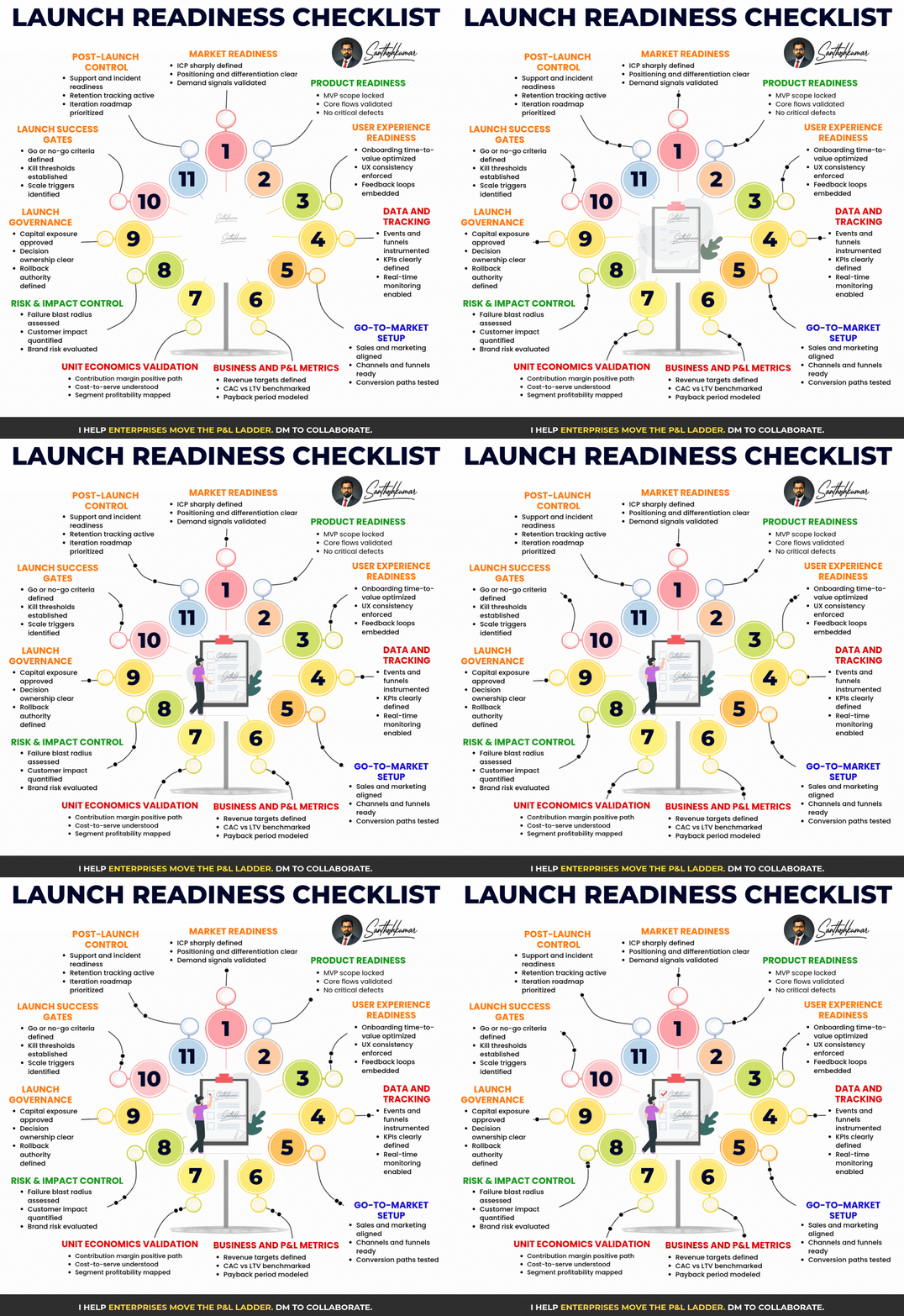
1. Launch Readiness Is a Business Discipline, Not a Milestone
A successful product launch is not determined by how much effort was invested in development. It is determined by how effectively the business is prepared to scale, monetize, support, and sustain customer adoption. Many organizations celebrate release milestones only to discover that market demand, operational readiness, and financial realities were never fully validated. Launch readiness is not a project checkpoint—it is a business discipline.
2. Product Readiness: Validate Before You Scale
The foundation of every successful launch starts with product readiness. Leaders must ensure:
- MVP scope is fully locked.
- Core business flows are validated.
- Critical defects are eliminated.
- Performance and scalability are confirmed.
A product that is technically complete but operationally unprepared creates customer friction from day one. The objective is not simply to deploy a solution but to deliver a reliable experience at scale.
3. Market Readiness & User Experience: Build for Adoption
Before entering the market, organizations should validate:
- Ideal Customer Profile (ICP) is clearly defined.
- Positioning and differentiation are understood.
- Demand signals are validated.
- Onboarding journey is frictionless.
- Feedback mechanisms are embedded.
Customers rarely adopt products because of features alone. They adopt solutions that solve problems quickly, clearly, and consistently. A seamless user experience directly influences adoption, retention, and advocacy.
4. Commercial Readiness: Align Revenue with Execution
A launch without commercial alignment is merely activity without outcomes. Organizations must establish:
- Sales and marketing synchronization.
- Channel and funnel readiness.
- Conversion path validation.
- Revenue target alignment.
- Customer acquisition economics.
Metrics such as CAC, LTV, payback period, and profitability assumptions should be validated before launch. Sustainable growth begins with financial discipline.
5. Data, Risk & Governance: Protect the Business
High-performing organizations never rely on assumptions. They operate with visibility and control through:
- Real-time KPI monitoring.
- Go/No-Go decision criteria.
- Defined ownership and accountability.
- Rollback and contingency plans.
- Customer impact assessments.
Strong governance reduces uncertainty, accelerates decision-making, and protects business value during critical launch periods.
6. Launch Day Is the Beginning, Not the Finish Line
The best product leaders understand that launch day is not the end of the journey—it is the beginning of value realization. When product readiness, customer experience, market validation, financial discipline, risk management, and post-launch support come together, organizations create predictable growth engines instead of high-risk launches. Launch readiness is not a checklist for product teams; it is a strategic framework for leaders accountable for revenue, customer outcomes, and P&L performance.